
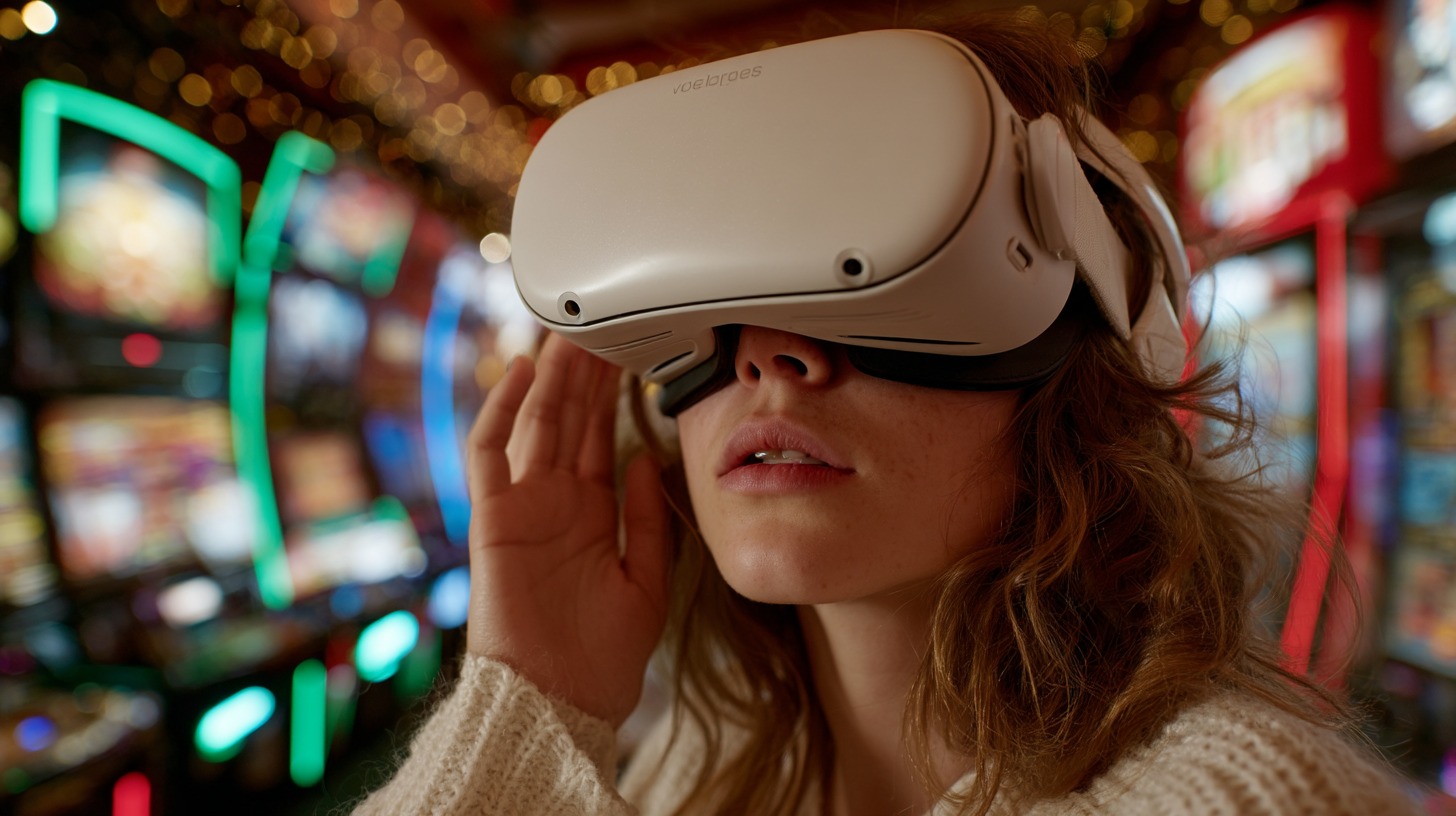
Traditional online casinos are hitting their limits. With the online gambling industry projected to grow from $78.66 billion in 2024 to $153.57 billion by 2030, operators need new ways to attract players. Adding games or bigger bonuses isn’t enough; a fundamental shift in user interaction is needed.
Augmented Reality (AR) and Virtual Reality (VR) are key to this transformation. This isn’t just a tech update but a move from passive, screen-based experiences to active, immersive 3D ones. For example, a platform like AllStarCasino could use this technology to create a virtual casino floor where players can walk around and interact with games. By offering a sense of real presence, this format could redefine online gambling.
Why the iGaming industry is betting on AR and VR
Integrating immersive technologies is a strategic move, driven by market demands for competitive tools and shifts in how consumers interact with digital content.
A source of competitive advantage
The iGaming market is oversaturated. Most operators offer similar games and promotions, leading to a “bonus race” where companies compete on welcome offers. This model erodes profit margins and brand loyalty, as players can easily switch platforms for a better deal. AR and VR can break this cycle by offering a unique user experience. For instance, a platform like All Star Casino could build a virtual casino or an AR-enhanced app to create a stronger emotional connection with its players, making the brand more memorable. This way, loyalty is built on an exclusive experience, not just financial incentives.
Player interest and digital entertainment trends
Generation Z grew up with interactive 3D universes like Roblox and Fortnite, so they expect gamification and social engagement. Digital products must be interactive from the start. This demand is reflected in the metaverse’s growth, projected to become a nearly $500 billion market by 2030. Operators who ignore this shift risk becoming irrelevant. Integrating AR and VR lets them connect with new audiences in a familiar format.
What is AR? Augmented reality in iGaming
Augmented reality (AR) superimposes digital information onto the real world through a device like a smartphone. Using the device’s camera, AR places virtual elements in a physical space. Instead of replacing reality, AR enhances it. Its main advantage is accessibility, as it only requires a smartphone. Operators can bring casino elements into a player’s home, like unfolding a virtual roulette table on a coffee table, without needing specialized equipment.

What is VR? Full immersion in a virtual casino
While AR enhances the real world, Virtual Reality (VR) creates a completely artificial one. A VR headset disconnects the user from their surroundings and immerses them in a digital environment. The technology tracks head and hand movements for natural interaction, creating a powerful sense of presence. VR can recreate the social atmosphere of a real casino, transporting the player to an extraordinary setting, whether it’s an elite club in Macau or a gambling station on Mars.
How are AR and VR used in gambling?
Immersive technologies are already improving user experiences across various gambling sectors.
Live games with AR elements
In live casinos, AR adds interactive elements to the broadcast. Animated 3D objects like winning combination effects or pop-up stats are overlaid on the video feed. This enriches the visuals, increases engagement, and promotes transparency by displaying key game data in real time.
Virtual poker rooms and VR roulette
VR’s main value is restoring the social atmosphere lost in online gambling. It can create realistic virtual casinos where players, as personalized avatars, interact with each other and the dealer. This is especially valuable in poker, where reading opponents is key. VR allows players to observe the behavior and gestures of other avatars, making the virtual game more tense and engaging.
Interactive betting and 3D interfaces
In sports betting, AR and VR can transform passive viewing into an active, social event. An AR app could overlay an interactive information layer onto a live match, showing heat maps or player stats. Players could analyze the game and place bets within a single interface. VR tackles the social isolation of online betting by creating shared virtual spaces like sports bars where users can watch matches together, fostering a stronger connection to the platform.